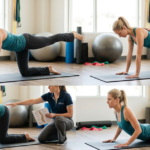

Don’t let weak wrists hold you back! These wrist exercises build strength, improve flexibility, and relieve discomfort, essential for everyone from office workers to weightlifters.
If you’ve ever felt a twinge in your wrist after typing for hours, struggled to open a jar, or felt pain during push-ups or planks, you know how limiting weak or injured wrists can be. Your wrists are involved in almost every upper body movement – from lifting groceries to typing emails to performing push exercises and wall push-ups.
Wrist exercises are essential maintenance for your body’s most versatile tools. They strengthen the small muscles and connective tissues that control your hands and fingers, improve grip strength for sports and daily tasks, and prevent chronic conditions like carpal tunnel syndrome and tendonitis.
The good news is that wrist exercises don’t require much time or equipment. A few minutes of daily stretching and strengthening can transform your wrist health, reduce pain, and improve your performance in everything from kettlebell workouts to chest workouts at home.
For a complete upper body routine, pair wrist exercises with forearm stretching exercises, arm stretches, and triceps stretches.
🔍 What Wrist Exercises Target
Wrist exercises focus on the complex network of muscles, tendons, and ligaments in your forearms and hands, improving grip strength, joint stability, and overall wrist flexibility. Think of them as maintenance for your body’s most versatile tools!
Unlike larger muscle groups that respond to heavy loading, the wrists require a combination of gentle stretching, controlled mobility work, and progressive strengthening. This balanced approach protects the joint while building resilience.
✨ Key Benefits of Good Wrist Exercises
Your wrists are involved in almost every upper body movement. Keeping them strong and flexible improves your performance in the gym and reduces pain in daily life.
✅ Relieves pain and discomfort from repetitive strain
✅ Improves grip strength for sports and daily tasks
✅ Enhances wrist flexibility and range of motion
✅ Prevents injuries by strengthening supporting muscles
✅ Reduces stiffness from typing or phone use
✅ Prevents Carpal Tunnel Syndrome – Regular wrist exercises reduce compression on the median nerve, alleviating numbness and tingling
✅ Improves Lifting Performance – Stronger wrists enhance grip for kettlebell workouts, deadlifts, and pull day exercises
✅ Supports Push Movements – Wrist stability is essential for push exercises, wall push-ups, and chest workouts at home
✅ Reduces Risk of Sprains – Strong ligaments and tendons are less likely to tear during falls or heavy lifting
✅ Enhances Daily Function – Opening jars, carrying bags, and typing become easier and pain-free
Consistency is key. Daily wrist stretching and 2-3 weekly strengthening sessions will transform your wrist health, grip strength, and pain levels over time.
🧠 Anatomy Deep Dive: Muscles and Structures of the Wrist
The wrist is a complex joint involving multiple bones, muscles, tendons, and ligaments:
| Structure | Location | Function | Why It Gets Tight/Weak |
|---|---|---|---|
| Flexor Carpi Radialis | Inner forearm, attaches to wrist | Bends wrist forward; controls grip | Typing, gripping, phone use |
| Flexor Carpi Ulnaris | Inner forearm, ulnar side | Bends wrist forward; stabilizes wrist | Repetitive wrist flexion |
| Extensor Carpi Radialis | Outer forearm | Extends wrist backward; opens hand | Mouse use, weightlifting |
| Extensor Carpi Ulnaris | Outer forearm, ulnar side | Extends and adducts wrist | Repetitive extension |
| Carpal Tunnel | Passageway in the wrist | Protects the median nerve | Compression from repetitive use |
| Median Nerve | Runs through carpal tunnel | Provides sensation to thumb, index, middle fingers | Compressed in carpal tunnel syndrome |
When these structures become tight or weak, the result can be pain, numbness, reduced grip strength, and limited range of motion. Regular wrist exercises address all these issues.
For complementary forearm work, explore forearm stretching exercises and wrist flexor stretch.
👥 Who Should Do Wrist Exercises
This routine is ideal for:
-
Desk workers and remote professionals – counteracts hours of typing and mouse use
-
Weightlifters – improves grip strength for kettlebell workouts, deadlifts, and pull day exercises
-
Gamers – prevents stiffness and pain from prolonged controller or keyboard use
-
Musicians – pianists, guitarists, and string players need flexible, strong wrists
-
Athletes – tennis players, climbers, and gymnasts rely on wrist stability
-
Yoga practitioners – prepares wrists for weight-bearing poses like Downward Dog and Crow
-
Older adults – maintains hand strength for daily activities
-
Anyone with carpal tunnel symptoms – gentle exercises relieve compression
-
Anyone recovering from wrist strain – controlled movement restores function
-
Anyone wanting better grip strength – essential for back workouts with dumbbells
It works especially well when combined with forearm stretching exercises, arm stretches, and triceps stretches for complete upper arm and wrist mobility.
🏋️ How To Do Wrist Exercises
1️⃣ Wrist Flexor Stretch
- Extend arm forward, palm facing up
- Gently pull fingers down with the opposite hand
- Hold for 20-30 seconds, feeling the stretch in the forearm
- Repeat 3 times per wrist
2️⃣ Wrist Extensor Stretch
- Extend arm forward, palm facing down
- Gently press fingers toward the floor
- Hold for 20-30 seconds
- Complete 3 reps per wrist
3️⃣ Wrist Circles for Flexibility
- Extend arms forward, make fists
- Rotate wrists in large circles clockwise
- Reverse direction after 15 seconds
- Continue for 1-2 minutes total
4️⃣ Resistance Band Wrist Curls
- Sit with your forearm on the table, palm up
- Step on the band end, hold the other end in your hand
- Curl wrist upward against resistance
- 3 sets of 12-15 reps per wrist
Modifications:
- For hurt wrist exercises: Reduce range of motion, use lighter resistance
- Advanced: Add weight, increase hold times
⚠️ Safety Tips & Common Mistakes
🚫 Don’ts
✖ Push through sharp pain (discomfort is okay, pain is not!)
✖ Force joints beyond comfortable range
✖ Hold your breath during exercises
✅ Do’s
✔ Start gently and progress slowly
✔ Stop immediately if you feel nerve tingling
✔ Warm up with light movement first
FAQs❓
Q: What are good wrist exercises for someone with existing pain?
A: Wrist exercises for pain should start gently with stretching and range-of-motion movements. Avoid resistance until pain decreases.
Q: How often should I do wrist exercises?
A: Daily for stretches, 2-3 times weekly for strengthening exercises. Consistency is key for improving wrist flexibility!
Q: Can wrist exercises help with carpal tunnel?
A: Yes! Good wrist exercises that improve flexibility and strength can alleviate carpal tunnel symptoms when done consistently.
Q: Are there specific wrist exercises I should avoid?
A: Avoid heavy loading and extreme positions with acute pain. Focus on gentle wrist exercises for pain relief first.
Q: How long until I see results from wrist exercises?
A: Most people notice improved flexibility within 2-3 weeks, with significant strength gains in 4-6 weeks of consistent practice.
🌟 Pro Tip
Incorporate these wrist exercises into your daily routine, perfect for during work breaks or while watching TV. Your wrists will thank you!