
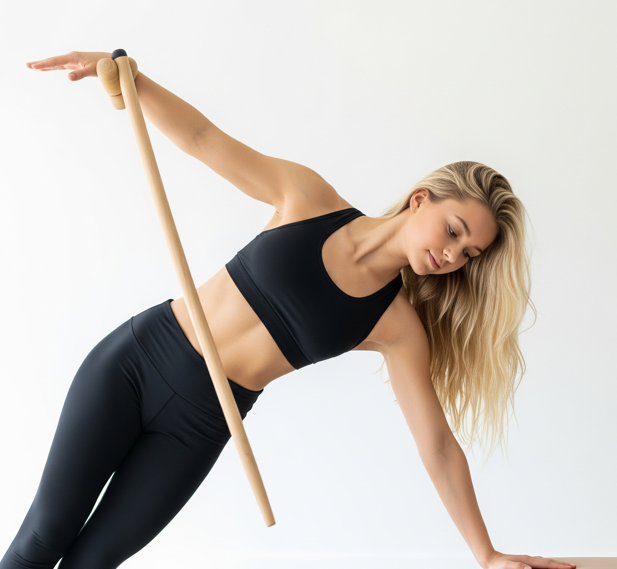
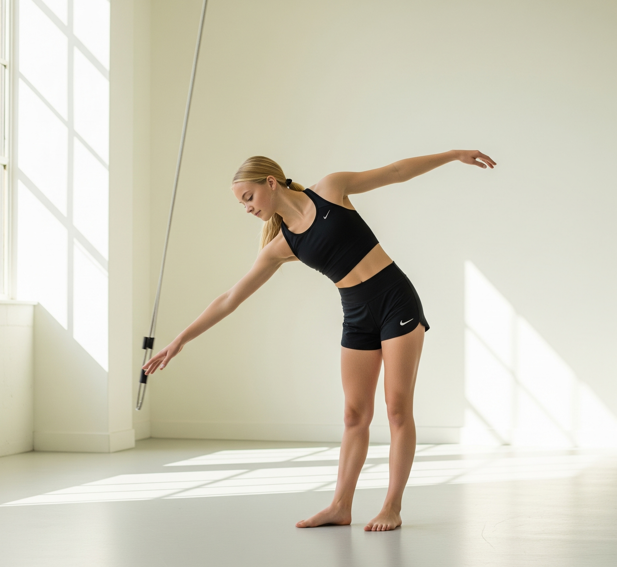
Pendulum exercises (also called Codman’s exercises) are soothing, low-impact movements that help improve shoulder flexibility and reduce stiffness. Perfect for post-injury recovery, arthritis relief, or general mobility maintenance, these exercises work like a “lazy swing” for your shoulder joint.
When your shoulder is tight, your upper back and neck compensate – often leading to tension headaches, rounded posture, and even reduced breathing capacity. This chain reaction affects everything from how you sit at a desk to how you perform exercises like push exercises and chest workouts at home.
Pendulum exercises break this cycle by restoring gentle mobility at the source. They’re often the first movement prescribed after shoulder injury or surgery because they provide motion without load – protecting healing tissues while preventing stiffness. Regular practice also complements rotator cuff exercises, scapular retractions, and shoulder stretch with stick as strength returns.
✅ Relieves Shoulder Pain – Gently loosens tight muscles without strain.
✅ Improves Flexibility – Gradually increases range of motion over time.
✅ Enhances Circulation – Promotes blood flow to stiff or injured areas.
✅ Reduces Stiffness – Great for frozen shoulder or post-surgery rehab.
✅ No Equipment Needed – Just your body and a little space!
✅ Promotes Healing After Surgery – Gentle, passive movement increases blood flow without stressing healing tissues – often prescribed after rotator cuff repair or shoulder replacement
✅ Reduces Frozen Shoulder Progression – Early, consistent pendulum exercises can prevent adhesions from forming, maintaining available range of motion
✅ Prepares for Advanced Rehab – Builds the foundation for rotator cuff exercises, scapular retractions, and wall angel stretch as strength returns
✅ Calms the Nervous System – The rhythmic, gravity-driven motion has a soothing effect, reducing pain perception and muscle guarding
✅ Accessible for All Ages – No equipment, no strength required—safe for seniors, beginners, and anyone recovering from injury
🩹 Post-Surgery Patients – Often the first approved movement after rotator cuff repair, labral tear surgery, or shoulder replacement.
🧊 Frozen Shoulder Sufferers – Gentle daily motion helps prevent adhesions from tightening further.
🏋️♂️ Overhead Athletes – Baseball players, swimmers, and tennis players use them for warm-up and recovery.
🧑💻 Desk Workers – Counteracts the stiffness that develops from hours of typing and mouse work.
🧓 Older Adults – Maintains shoulder mobility safely without requiring strength or balance.
🤕 Arthritis Patients – Provides gentle movement without stressing inflamed joints.
🧘 Yoga Practitioners – Prepares the shoulders for deeper poses like Downward Dog and Chaturanga.
🏃 Runners – Releases upper body tension that accumulates during long runs.
🧑🦽 Anyone with Limited Mobility – Can be performed seated or with minimal range – accessible for all.
🧘♀️ Anyone Recovering from Injury – The safest starting point for rebuilding shoulder mobility after any upper body issue.

Like a hypnotic pocket watch gently swaying, this pendulum swing exercise helps 'unstick' stiff shoulders. Perfect for warming up or relieving aches after desk work just let gravity do the work!

Imagine your arm is a relaxed metronome ticking slowly back and forth. This soothing pendulum stretch eases shoulder tension while improving controlled mobility

Gentle swinging motions to relieve stiffness, improve mobility, and promote healing in the shoulder joint. Ideal for post-injury rehab or frozen shoulder.

Low-impact movements to enhance shoulder flexibility, reduce pain, and increase blood flow without straining muscles
Modifications:
Muscles Worked | Difficulty Level |
Rotator Cuff | Beginner |
Deltoids | Adjustable |
Trapezius (lightly) | No Equipment Needed |
✔ Keep Movements Small – Avoid large swings that could strain the joint.
✔ Engage Your Core – Prevents excessive lower back bending.
✔ Breathe Naturally – Don’t hold your breath; relax into the motion.
❌ Avoid These Mistakes
✖ Force the Motion – Let gravity do the work; no pushing or pulling.
✖ Hunch Your Shoulders – Keep them relaxed and down.
✖ Rush the Reps – Slow, controlled swings are key.
For recovery or frozen shoulder, aim for 2-3 times daily with small, pain-free circles. For general maintenance, once daily is sufficient. Consistency matters more than duration – even 1 minute per session adds up. Pair these with upper trap stretch and wall angel stretch for complete shoulder mobility.
Yes. Pendulum exercises are often the first step in non-surgical rotator cuff rehab. They provide motion without load, preventing stiffness while the tendon heals. As strength returns, progress to rotator cuff exercises, scapular retractions, and shoulder stretch with stick.
No. You should feel a gentle, pain-free motion. If you feel sharp pain, reduce the range of motion or stop. These exercises are designed to be soothing, not challenging. For additional relief, explore physical therapy exercises for headaches and neck workouts if tension travels up from the shoulder.
Absolutely. Pendulum exercises are a cornerstone of frozen shoulder treatment. They help maintain available range and prevent further stiffness. Combine with doorway stretch, thread the needle stretch, and childs pose as mobility improves.
Start with small circles and no weight. As motion becomes easier:
Increase circle size
Add forward/back and side-to-side motions
Add light weight (1-2 lbs)
Progress to pull day exercises, back workouts with dumbbells, and kettlebell workouts for balanced strength
Whether you call them pendulum exercises for shoulder rehab, pendulum stretch exercises, or just “gentle swings,” these moves are a must for flexibility and pain relief. Try these pendulum exercises shoulder daily for best results!