Feeling the weight of the world on your shoulders? 🤔 It often settles right in your neck. Whether you’re hunched over a computer or constantly on your phone, your neck muscles take a beating. This guide is your go-to resource for simple, effective neck workouts you can do anywhere to release tension, build strength, and improve your overall flexibility.
If you’ve ever finished a long day of work with a stiff, achy neck, or found yourself constantly rolling your shoulders to release tension, you’re not alone. The average person spends 6-8 hours daily with their head tilted forward – whether looking at a computer screen, scrolling through a phone, or driving.
Neck workouts are essential for combating “tech neck,” relieving tension headaches, and improving posture. When your head juts forward by just one inch, the effective weight of your head increases from 10-12 pounds to nearly 30 pounds on your cervical spine. This extra load leads to chronic tension, muscle imbalances, and even reduced mobility.
The good news is that consistent neck exercises can reverse this damage. By strengthening the deep neck flexors and stretching the overworked upper traps, you can restore balance, reduce pain, and stand taller with confidence.
For a complete upper body routine, pair neck workouts with chin tuck stretch, upper trap stretch, and scapular retractions.
Introduction: Why Your Neck Needs Attention
This series of stretches and exercises specifically targets the complex web of muscles in your neck, upper back, and shoulders, the very areas that tighten up from poor posture and stress. Think of it as a reset button for your upper body! 🔄
Your neck is one of the most vulnerable areas of your body. It supports the weight of your head (10-12 pounds) through a remarkable range of motion. But this mobility comes at a cost – the neck is prone to strain, tension, and injury when not properly cared for.
✨ Key Benefits of Neck Workouts
Unlocking a stronger, more flexible neck isn’t just about feeling good in the moment; it has long-term perks!
- Combat “Tech Neck”: Directly counteracts the forward-head posture from staring at screens all day.
- Relieve Tension & Headaches: Loosen tight muscles that are a primary cause of tension headaches.
- Enhance Posture & Flexibility: Strengthen supporting muscles to stand taller and increase your neck’s range of motion.
- Reduce Stress & Promote Relaxation: Releasing physical tension in the neck can have a calming effect on your entire nervous system. 🧘♀️
🧠 Anatomy Deep Dive: The Muscles of the Neck
Neck workouts target several important muscles in the neck and upper back:
| Muscle | Location | Function | Why It Gets Tight |
|---|---|---|---|
| Upper Trapezius | Neck to shoulders | Elevates shoulders; extends and rotates the head | Stress, prolonged sitting, phone use |
| Sternocleidomastoid (SCM) | Front/side of neck | Rotates and flexes the head; assists in breathing | Forward head posture, stress, shallow breathing |
| Scalenes | Side of neck | Assist in neck flexion and breathing | Desk work, anxiety, poor posture |
| Levator Scapulae | Back/side of neck, connects to shoulder blade | Elevates the shoulder blade; rotates the neck | “Knot” muscle; tight from stress and posture |
| Suboccipitals | Base of skull | Fine-tune head position | Screen time, forward head posture |
| Deep Neck Flexors | Front of neck, deep to SCM | Stabilize cervical spine | Weak from underuse; tight SCM overcompensates |
When these muscles become chronically tight or weak, the result is forward head posture, tension headaches, and limited range of motion. Regular neck workouts restore balance.
For a deeper understanding, explore chin tuck stretch, neck extension, and upper trap stretch.
👥 Who Should Do Neck Workouts
This routine is ideal for:
-
Desk workers and remote professionals – counteracts hours of screen time
-
Smartphone users – fights “text neck” tension
-
Tension headache sufferers – releases tight SCM and upper trap muscles
-
Athletes – improves focus and force transfer during jump squats, burpees, and kettlebell workouts
-
Weightlifters – balances the forward head position during heavy lifts
-
Yoga practitioners – prepares neck for backbends and inversions
-
Older adults – maintains cervical mobility and reduces fall risk
-
Runners – opens the airway and releases upper body tension
-
Anyone with TMJ or jaw tension – releases the SCM muscle
-
Anyone wanting better posture – essential for restoring natural alignment
It works especially well when combined with chin tuck stretch, neck extension, upper trap stretch, and scapular retractions for complete upper body posture correction.
🧘♀️ Your Step-by-Step Neck Workout Routine
Perform these moves slowly and smoothly. No jerking! Breathe deeply throughout each stretch.
1. Chin Tucks: The Posture Corrector
This is the foundation for all healthy neck movement.
- Instructions: Sit or stand with your spine straight. Gently pull your chin and head straight back, creating a “double chin.” Keep your eyes level, don’t tilt your head down. You should feel a stretch at the base of your skull and down the back of your neck. Hold for 3-5 seconds, then release.
- Beginner Modification: Do this while lying on your back with your knees bent; gravity will assist you.
- Advanced Version: Hold the tuck for 10-15 seconds, or combine it with a slow head turn to each side while maintaining the tuck.
2. Side Neck Stretch: The Instant Stress Reliever
A classic for a reason, it feels amazing.
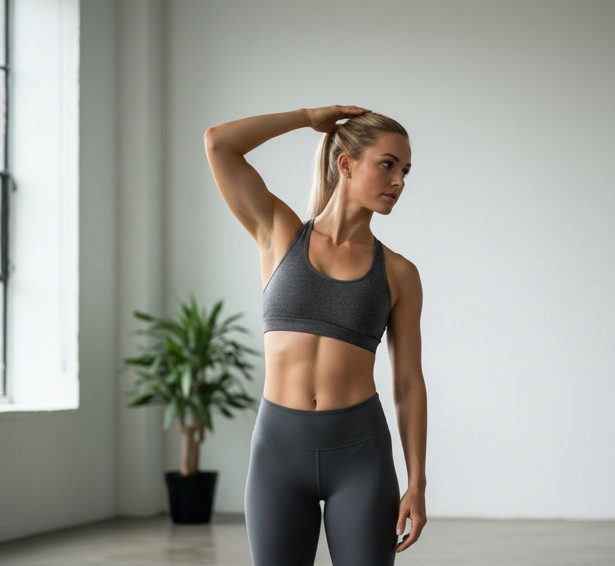
- Instructions: Sit tall. Slowly lower your right ear toward your right shoulder. To deepen the stretch, you can gently place your right hand on the left side of your head. Keep your shoulders relaxed and down. Hold for 15-30 seconds, then slowly return to the center and repeat on the left side.
- Pro-Tip: Imagine you’re trying to create as much space as possible between your ear and shoulder.
3. Levator Scapulae Stretch: The “Knot” Buster
This targets a specific muscle that often holds major tension, connecting your neck to your shoulder blade.
- Instructions: Sit comfortably. First, lower your chin toward your chest. Then, rotate your head about 45 degrees to the left as if you’re looking toward your left knee. You should feel a deep stretch on the right side, behind your neck. Hold for 15-30 seconds. Repeat on the other side.
⚠️ Safety First! Your Neck Protection Guide
Your neck is delicate. Always prioritize safety over intensity.
- Move Like Molasses: Slow, controlled movements are key. This isn’t a race!
- Listen to Your Body: Feel a sharp, shooting, or electric pain? STOP IMMEDIATELY. You should only feel a gentle pulling sensation.
- Breathe Deeply: Never hold your breath. Inhale to prepare, and exhale as you deepen into the stretch. This promotes flexibility and relaxation. 🌬️
- Warm Up Gently: Before stretching, take a warm shower or place a warm towel on your neck for a few minutes to loosen the muscles.
Common Mistakes to Avoid 👎
- The “Hurricane” Head Roll: Avoid rolling your head in a full, fast circle. This can compress the cervical vertebrae. Stick to controlled, semi-circular motions.
- Rushing the Stretch: Don’t force your head down with your hands. Use your hands for gentle guidance, not aggressive pushing.
- Shoulder Shrugging: Keep those shoulders away from your ears! Press them down actively to get a true neck stretch.
- Holding Your Breath: This creates tension, which is the exact opposite of your goal.
🤔 Neck Workouts: Your Questions, Answered!
Q1: Can I really get a “big neck” from these workouts?
While these stretches focus on flexibility and tension relief, strengthening exercises (like isometrics) can help build lean muscle in the neck over time. For a significant size (a “big neck”), you would typically need dedicated resistance training under professional guidance.
Q2: How often should I do these back and neck workouts?
You can do these gentle stretches every day, especially if you have a desk job. For strengthening exercises, 2-3 times a week with rest days in between is sufficient.
Q3: I feel pain during a stretch. What should I do?
Stop immediately. Pain is a signal that something is wrong. If the pain persists, consult a healthcare professional, like a physical therapist or doctor, before continuing.
Q4: Are neck workout at home routines effective?
Absolutely! Consistency is more important than location. Doing a little bit every day at home is far more effective than an intense session once a month.
Pro Tip
Set an hourly alarm. ⏰ When it rings, perform 5 slow Chin Tucks to reset your head position, then gently turn your head to each side. This brief, consistent ritual fights “Tech Neck” buildup far more effectively than one long weekly session. Consistency is your secret weapon for lasting flexibility! 💪