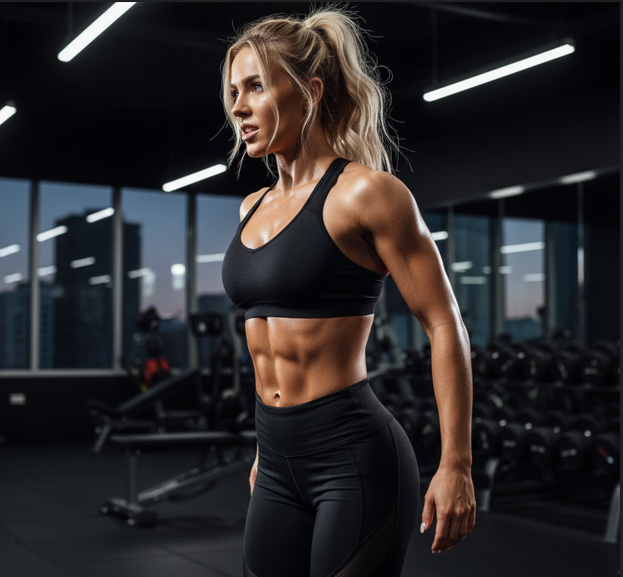
Unlock your core potential! These ab workouts target your entire midsection from upper abs to lower abs and obliques, building strength that supports everything from athletic performance to everyday movements.
If you’ve ever struggled with lower back pain, poor posture, or felt weak during compound lifts like squats and deadlifts, a weak core is often the culprit. Your core is more than just your six-pack muscles – it’s a complex system of stabilizers that protect your spine, transfer force between your upper and lower body, and keep you upright.
Ab workouts are about more than aesthetics. They build the foundation for every movement you make-from lifting groceries to running a marathon. A strong core improves posture, reduces back pain, enhances athletic performance, and yes, creates definition when combined with proper nutrition.
The science is clear: core strength is directly linked to lower back health, balance, and functional fitness. Whether you’re an athlete, a desk worker, or someone wanting to feel stronger in daily life, the exercises in this guide will help you build a resilient, powerful midsection.
For a complete fitness routine, pair ab workouts with core workouts, best ab workout for lower stomach, and reverse crunches.
🔍 What Ab Workouts Target
Think of it as building a natural weight belt that improves posture, power, and overall flexibility! Ab workouts focus on strengthening your rectus abdominis, obliques, transverse abdominis, and deep core muscles.
Unlike isolation exercises that target a single muscle, compound ab movements engage your entire core complex-from the deep stabilizers to the visible “six-pack” muscles. This comprehensive engagement is what builds functional strength that transfers to everything else you do.
✨ Key Benefits of Ab Workouts
A strong core is the foundation of a strong body. It protects your spine, improves your posture, and transfers power between your upper and lower body. These ab workouts target every layer of your core for complete development.
✅ Builds core strength for better athletic performance
✅ Improves posture and reduces back pain
✅ Enhances functional flexibility for daily activities
✅ Boosts metabolism through muscle engagement
✅ Creates definition when combined with proper nutrition
✅ Protects the Lower Back – A strong core stabilizes the lumbar spine, reducing the risk of injury during deadlifts, squats, and daily activities
✅ Improves Balance and Stability – Core strength is essential for single leg RDL, reverse lunges, and standing exercises
✅ Enhances Breathing – A strong transverse abdominis improves diaphragmatic function, benefiting best cardio workouts at home and endurance training
✅ Transfers Power – A stable core allows force to flow efficiently between your lower and upper body during kettlebell workouts, jump squats, and push exercises
✅ Supports Posture – Strong core muscles counteract the forward slump from desk work, complementing chin tuck stretch and scapular retractions
Consistency is key. Training your core 3-5 times per week with proper form and progressive overload will transform your strength, posture, and overall movement quality.
🧠 Anatomy Deep Dive: Muscles Worked in Ab Workouts
Ab workouts target several important core muscles:
| Muscle Group | Location | Function | Best Exercises |
|---|---|---|---|
| Rectus Abdominis (Upper & Lower) | Front of abdomen, from ribs to pelvis | Flexes the spine; creates the “six-pack” look | Crunches, leg raises, reverse crunches |
| External Obliques | Sides of abdomen, outer layer | Rotates and laterally flexes the spine | Russian twists, bicycle crunches, side bends |
| Internal Obliques | Sides of abdomen, deep to external | Assists rotation and compression | Twisting movements, planks with rotation |
| Transverse Abdominis | Deep core, wraps around the midsection | Stabilizes the spine; acts as a natural weight belt | Planks, dead bug, vacuum exercises |
| Rectus Abdominis (Lower Fibers) | Lower front abdomen | Stabilizes pelvis; flexes lumbar spine | Leg raises, reverse crunches, hanging knee raises |
| Pelvic Floor | Base of pelvis | Supports pelvic organs; works with transverse abdominis | Deep core engagement, breathing exercises |
When you perform compound core exercises like planks, leg raises, and Russian twists, you’re engaging all these muscles in coordination – building not just visible abs, but functional core stability that improves every movement you make.
For complementary core work, explore core workouts, reverse crunches, and plank for abs.
👥 Who Should Do Ab Workouts
This routine is ideal for:
-
Beginners – start with basic planks and leg raises
-
Athletes – core stability is essential for jump squats, burpees, and reverse lunges
-
Weightlifters – protects the lower back during deadlifts and squats
-
Runners – improves running efficiency and reduces injury risk
-
Desk workers – counteracts hours of sitting and poor posture
-
Anyone with lower back pain – strengthens supporting muscles
-
Postpartum individuals – helps rebuild deep core strength (consult doctor first)
-
Older adults – maintains balance and prevents falls
-
Anyone wanting visible abs – builds muscle definition (paired with nutrition)
-
Anyone wanting better posture – core strength supports spinal alignment
It works especially well when combined with core workouts, best ab workout for lower stomach, reverse crunches, and full body stretching for complete core development.
🏋️ How To Do Ab Workouts
1️⃣ Plank Series (Full Core Engagement)
- Start in forearm plank position, elbows under shoulders
- Maintain a straight line from head to heels for 30-60 seconds
- Advanced: Add shoulder taps or hip dips
- Beginner: Drop to knees, maintain core engagement
2️⃣ Lower Ab Workouts (Targeted Focus)
- Leg Raises: Lie on your back, lift your legs to 90 degrees, and lower slowly
- Reverse Crunches: Lift hips off the floor, knees toward the chest
- Flutter Kicks: Small, controlled kicks with the low back pressed down
- Complete 3 sets of 15-20 reps each
3️⃣ Dynamic Core Moves
- Russian Twists: Seated, lean back 45°, twist side to side
- Bicycle Crunches: Alternate elbow to knee in fluid motion
- Mountain Climbers: From plank, drive knees to chest
- 3 sets of 30-45 seconds each
Modifications:
- Beginner: Reduce range, shorter holds, more rest
- Advanced: Add weights, increase time under tension
Quick Reference Table
| Exercise | Primary Muscles | Difficulty | Equipment | Key Benefit |
|---|---|---|---|---|
| Plank | Transverse abdominis, rectus abdominis, obliques | Beginner to Intermediate | None | Full core stability |
| Leg Raises | Lower rectus abdominis, hip flexors | Intermediate | None | Targets lower abs |
| Reverse Crunches | Lower rectus abdominis, transverse abdominis | Beginner to Intermediate | None | Lower ab focus, low-back friendly |
| Russian Twists | Obliques, rectus abdominis | Intermediate | Optional: weight | Rotational strength |
| Bicycle Crunches | Obliques, rectus abdominis | Intermediate | None | Dynamic core engagement |
| Mountain Climbers | Full core, shoulders, hip flexors | Intermediate to Advanced | None | Core cardio |
| Side Plank | Obliques, transverse abdominis | Intermediate | None | Lateral core strength |
⚠️ Safety Tips & Common Mistakes
🚫 Don’ts
✖ Pull on your neck during crunches (use core muscles!)
✖ Arch your back during planks (keep core tight!)
✖ Hold your breath (breathe steadily throughout!)
✅ Do’s
✔ Engage transverse abdominis (like zipping up tight jeans)
✔ Focus on quality over quantity
✔ Maintain neutral spine position
FAQs❓
Q: What are the best ab workouts for visible results?
A: The best ab workouts combine compound moves like planks with targeted exercises like leg raises, paired with proper nutrition for definition.
Q: How can I target lower abs specifically?
A: Lower ab workouts like leg raises, reverse crunches, and hanging knee raises are most effective when done with controlled movements.
Q: How often should I do ab workouts?
A: 3-5 times weekly, allowing at least one day of recovery between intense sessions.
Q: Can I get abs without dieting?
A: While ab workouts build muscle, reducing body fat through nutrition is essential for visibility. Abs are made in the kitchen and revealed in the gym!
Q: Are weighted ab exercises better than bodyweight?
A: Both have value! Bodyweight builds endurance, while weighted exercises increase strength. Incorporate both for balanced development.
🌟 Pro Tip
Pair your ab workouts with cardiovascular exercise and proper nutrition for the best results. Remember, core strength isn’t just about looks; it’s about building a foundation for all your movements!