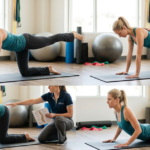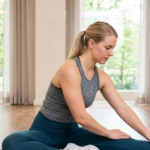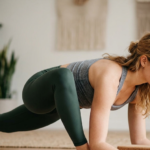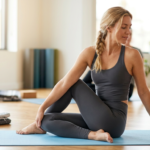
Who says you need weights to get ripped? These bodyweight exercises can help you build serious muscle, boost strength, and improve flexibility, all from your living room!
If you think you need a gym full of equipment to build muscle, think again. Your body is the only tool you need. Bodyweight exercises challenge your muscles through functional movements that translate directly to real-world strength – lifting, pushing, pulling, squatting, and climbing.
Bodyweight exercises are one of the most effective and accessible ways to build muscle, improve flexibility, and boost cardiovascular health. Whether you’re a beginner, a seasoned athlete, or somewhere in between, you can scale these movements to your fitness level. No equipment. No gym fees. No excuses.
The key to building muscle with bodyweight training is progressive overload – making exercises harder over time by changing leverage, adding reps, slowing down tempo, or advancing to more challenging variations.
For a complete fitness routine, pair bodyweight exercises with stretching exercises, full body stretching, and how to improve flexibility.
🔍 What These Bodyweight Exercises Target
This bodyweight exercise for a full body routine engages your chest, back, legs, core, and arms using only your body as resistance. Think of it as your personal “portable gym” that builds muscle while enhancing your overall flexibility and mobility!
Unlike isolation exercises that target single muscles, bodyweight compound movements work multiple muscle groups simultaneously. This makes them incredibly efficient for building functional strength and burning calories.
✨ Key Benefits of Bodyweight Exercises
Your body is the ultimate gym. These exercises build functional strength, improve flexibility, and challenge your cardiovascular system – all without a single piece of equipment.
✅ Builds lean muscle mass without expensive equipment
✅ Improves functional strength for everyday movements
✅ Enhances joint flexibility and range of motion
✅ Boosts metabolism for better fat burning
✅ Increases body control and mind-muscle connection
✅ No Equipment Needed – Perfect for travel, home workouts, or when gyms are closed
✅ Improves Balance and Coordination – Bodyweight exercises challenge stabilizer muscles
✅ Reduces Injury Risk – Lower impact than heavy weights when performed correctly
✅ Enhances Cardiovascular Health – Circuit-style bodyweight training spikes heart rate
✅ Scalable for All Levels – From knee push-ups to one-arm push-ups, everyone can participate
Consistency is key. Training with bodyweight exercises 3-4 times per week will transform your strength, flexibility, and body composition over time.
🏋️ Bodyweight Exercises for Full Body: Step-by-Step
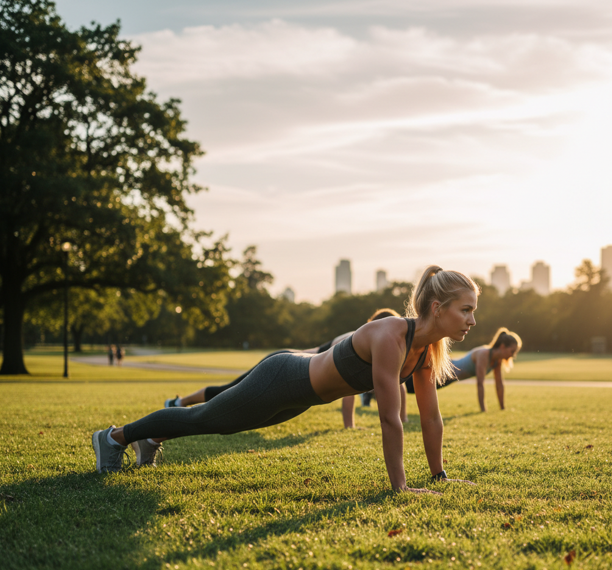
1️⃣ Push-Up Variations (Chest, Shoulders, Triceps)
- Standard Push-Ups – 3 sets of 10-15 reps
- Hands shoulder-width apart, maintain a straight line
- Lower until the chest nearly touches the floor
- Explosive push back to the start position
- Decline Push-Ups – 3 sets of 8-12 reps
- Feet elevated on a chair or a step
- Increases upper chest emphasis
2️⃣ Bodyweight Exercises for Abs & Core
- Plank to Push-Up – 3 sets of 10 reps per side
- Start in a forearm plank
- Push up to hand plank, one arm at a time
- Return to the forearm plank
- L-Sit Progressions – 3 sets of 20-30 seconds
- Sit on the floor, lift your body using arm strength
- Keep legs straight or bent based on ability
3️⃣ Lower Body Power Moves
- Pistol Squat Progressions – 3 sets of 6-10 reps per side
- Start assisted, then progress to full one-legged squats
- Maintain control throughout movement
- Glute Bridges with glute stretch integration- 3 sets of 15-20 reps
- Lie on your back, drive your hips upward
- Squeeze glutes at the top position
- Lower your hips slowly, then extend one leg straight out for a glute stretch.
- Hold the glute stretch for 15 seconds, then switch to the other side.
- Return to the starting position and repeat the sequence
Modifications:
- Beginner: Knee push-ups, assisted squats, shorter holds
- Advanced: Add tempo changes, single-leg variations, plyometrics
Quick Reference Table
| Exercise | Primary Muscles | Difficulty | Key Benefit |
|---|---|---|---|
| Standard Push-Up | Chest, shoulders, triceps, core | Intermediate | Upper body strength |
| Knee Push-Up | Chest, shoulders, triceps | Beginner | Foundational pressing strength |
| Plank | Core, shoulders, back | Beginner | Core stability |
| Squat | Quads, glutes, hamstrings | Beginner | Lower body strength |
| Lunge | Quads, glutes, hamstrings, stabilizers | Intermediate | Unilateral strength, balance |
| Glute Bridge | Glutes, hamstrings, core | Beginner | Glute activation, lower back health |
| L-Sit | Core, hip flexors, shoulders | Advanced | Core compression strength |
⚠️ Safety Tips & Common Mistakes
🚫 Don’ts
✖ Sacrifice form for extra reps (quality over quantity!)
✖ Hold your breath during exertion (breathe through movements!)
✖ Rush through exercises (control beats speed!)
✖ Arch your lower back during planks
✖ Let knees cave inward during squats
✖ Skip warm-up before intense sessions
✅ Do’s
✔ Warm up with dynamic stretching first
✔ Focus on the full range of motion for maximum flexibility
✔ Listen to your body’s limits and progress gradually
✔ Breathe steadily – exhale on effort
✔ Engage your core during all exercises
✔ Cool down with calf stretches and glute stretches
❓FAQs
Q: Can bodyweight exercises build muscle effectively?
A: Absolutely! Bodyweight exercises can build significant muscle when you use progressive overload through harder variations, more reps, or slower tempos.
Q: What’s the best bodyweight exercise for abs?
A: The most effective bodyweight exercises for abs include plank variations, L-sits, leg raises, and mountain climbers for complete core development.
Q: How often should I do bodyweight exercises for the full body?
A: 3-4 times weekly with rest days between sessions allows for muscle recovery and growth while maintaining flexibility.
Q: Are bodyweight exercises for men and women different?
A: Not really! Bodyweight exercises for men and women follow the same principles. Everyone can benefit from the same movements, adjusting intensity as needed.
Q: Do I need a bodyweight exercise chart to follow?
A: While not essential, a bodyweight exercises chart can help track progress and ensure you’re hitting all muscle groups for balanced development and flexibility.
🌟 Pro Tip
Create your own bodyweight exercises chart to track progress and ensure balanced muscle development. Focus on progressive overload by increasing difficulty, not just reps, to continue packing on muscle while maintaining optimal flexibility!